
— SIRIUS Solutions for
Clinical and biomedical research
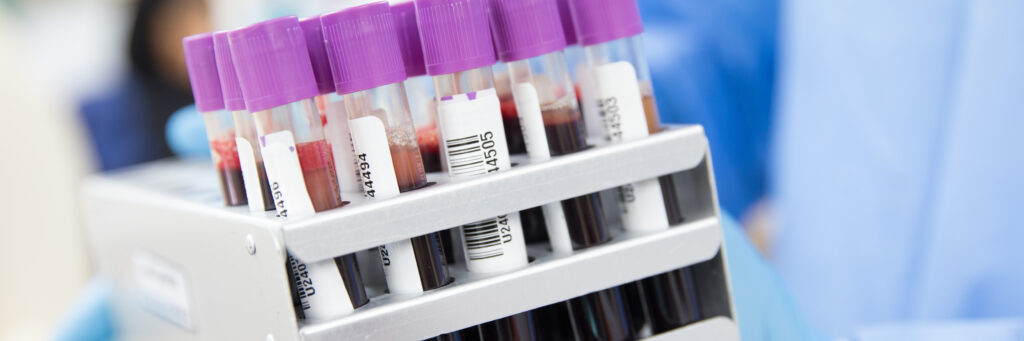
SIRIUS helps researchers put names and chemical classes on the unknown metabolites that separate patient groups – ranging from potential biomarkers in blood, urine, breath and stool to drug metabolites and exposure markers. All from a single fragmentation mass spectrometry workflow.
Why clinical and biomedical research teams use SIRIUS
In untargeted studies of patient samples, the features that best separate cases from controls are often exactly the ones no spectral library contains. Statistics can flag hundreds of discriminating signals, but without annotation they stay anonymous m/z values that cannot be linked to pathways or followed up.
SIRIUS annotates molecular formulas, structures and compound classes directly from fragmentation spectra, so biomarker candidates, microbial metabolites and xenobiotic conjugates can be characterized even when no matching reference spectrum exists.
Discover
Find and annotate metabolic signatures that distinguish disease states, sometimes years before a clinical diagnosis.
Trace
Follow drugs, dietary compounds and environmental toxicants through the body by annotating their metabolites and conjugates in biofluids.
Decode
Characterize the metabolites the microbiome produces and modifies, and connect them to host physiology and health outcomes.
Turn discriminating features into biomarker candidates
Case-control and cohort studies routinely produce thousands of features, of which only a small share can be matched against reference spectra. SIRIUS closes that gap: it proposes molecular formulas from isotope and fragmentation patterns, predicts a molecular fingerprint for every compound and uses it to search structure databases such as PubChem or your own in-house lists. Where no structure fits, compound class predictions still tell you whether a signal is an acylcarnitine, a bile acid or a fatty acid, which is often enough to link it to a pathway.
Molecular formula annotation from isotope patterns and MS/MS spectra, without relying on a spectral library.
Molecular structure annotation searching against built-in and custom structure databases.
Compound class prediction for features that have no database entry at all.
De novo structure generation proposes structures for compounds absent from every database.
Field example: breath diagnostics
Researchers analysed exhaled breath from 48 children with allergic asthma and 56 healthy controls in real time. SIRIUS assigned 134 discriminating features to compounds, pointing to altered lysine, tyrosine and arginine metabolism, and a breath-based classifier reached an AUC of 0.83.
Field example: retrospective cohorts
Biobanked dried blood spots are a unique resource for studying early-life origins of disease, but only if their metabolites survive storage. This study showed that most metabolites remain stable over a decade of biobank storage, and used SIRIUS to characterize the compounds that do change, helping researchers judge which signals in archived samples can be trusted.

More SIRIUS discoveries
Metabolites altered up to 14 years before diagnosis enable the prediction of Crohn’s disease with high accuracy years before symptoms appear.
Eccrine finger sweat analysis reveals healthy lifestyle shifts in children with overweight after long-term nutritional education and lifestyle intervention.
Map exposures and drug metabolism in human samples
Every biofluid carries traces of what a person has eaten, taken or been exposed to, largely in the form of metabolites and conjugates that are missing from public repositories. Reference standards rarely exist for them, and classic screening rules such as characteristic neutral losses miss labile species. SIRIUS annotates these compounds in silico and lets you extend the search space with predicted biotransformation products, so exposure and drug metabolite studies are no longer limited to what is already catalogued.
Transformation product prediction with the integrated BioTransformer 3.0 generates expected metabolites for your parent compounds.
Reaction Workflows and Sketcher let you define custom transformation rules, for example for conjugation chemistry.
Custom structure databases make targeted suspect lists, such as predicted conjugates, searchable alongside PubChem.
Parameter-free LC-MS preprocessing with automatic feature detection, alignment and adduct detection turns raw urine or plasma runs into annotation-ready features.
Field example: exposure biomonitoring
Combining enzymatic deacetylation with a custom database of predicted mercapturic acid conjugates, researchers used SIRIUS to map 847 urinary features and annotate 624 unique structures, 581 of them absent from HMDB and PubChem, far beyond the roughly 100 conjugates reported previously.

Field example: drug distribution
Mapping ketamine metabolism across twelve regions of the pig brain, researchers annotated numerous phase I and phase II metabolites with SIRIUS, five of them described in vivo for the first time. Two regions linked to metabolite clearance showed a distinct distribution, shedding light on how the drug crosses the blood-brain barrier.

More SIRIUS discoveries
Drug metabolites and drugrelated impurities in human plasma identified without reference standards and a priori knowledge of first- and second-pass drug metabolism.
Women with ovarian malignancies had significantly higher urinary levels of endocrine-disrupting chemicals.
Decode how the microbiome shapes host metabolism
Gut bacteria modify bile acids, conjugate lipids and even inactivate medications, producing molecules that are chemically novel and rarely documented. These microbially derived metabolites are increasingly linked to immunity, neurological disease and treatment response. SIRIUS classifies and annotates them across stool, plasma, milk and other biofluids, making it possible to connect microbial activity to host phenotypes.
Systematic compound classification across thousands of features gives a class-level map of microbial chemistry.
Network-enhanced molecular formula annotation using shared fragments and losses across a whole dataset.
Interactive Structure Sketcher lets you modify a candidate, for example a proposed amino acid conjugate, and instantly re-score it against the predicted fingerprint.
Spectral library and analog matching highlights shared substructures with known metabolites.
Field example: treatment response
Using SIRIUS, researchers showed how gut bacteria chemically transform GPCR-targeted drugs, activating some and inactivating others, which helps explain why patients respond differently to the same medication.
Field example: early-life development
A longitudinal study of 55 mother-infant pairs in Bangladesh detected 13,871 metabolomics features across biofluids. SIRIUS provided class predictions for thousands of them and characterized a trihydroxy bile acid elevated in infants of secretor mothers, showing that the fecal metabolome reports environmental and clinical influences more sensitively than microbial composition alone.

More SIRIUS discoveries
A gut-microbiome-derived metabolite was discovered to directly correlate with aging and cognitive impairment in human Alzheimer’s cohorts.
Gut bacteria compromise prostate cancer therapy by using specific enzymes to convert active antiandrogen drugs into completely inactive metabolites.
Annotations you can defend in peer review
A biomarker candidate is only as good as the evidence behind its identity. SIRIUS pairs every formula and structure annotation with explicit, exportable measures of confidence, so you can decide which hits to take forward to standards, targeted assays or validation cohorts.
Confidence Score
Rates how likely a structure hit is to be correct, similar in spirit to a false discovery rate, so you can select the most confident identifications across thousands of compounds.
Substructure validation
Links fragment peaks and neutral losses to substructures of a candidate, so an annotation can be checked peak by peak and exported as a publication-ready figure.
Cross-checks against reference spectra
Automatic spectral library matching against in-house libraries and a curated collection of public spectra from GNPS, MassBank and MsnLib.
Exportable, reproducible results
Export scores, annotations and summaries for downstream statistics, supplementary tables and data sharing.
Built for cohort-scale studies
Longitudinal and multi-biofluid studies easily reach hundreds of samples and tens of thousands of features. SIRIUS takes you from raw LC-MS/MS runs to annotated features in one environment and fits into the pipelines your lab already runs.
Parameter-free preprocessing
Import mzML runs directly with automatic feature detection, alignment and adduct detection, including quality metrics for prioritization.
GUI, CLI and API
All interfaces share one persistence layer: run thousands of compounds via the CLI or Python API, then inspect selected results in the GUI.
Software integrations
Integrations with tools such as mzmine, MassHunter and Compound Discoverer move results back into the software your lab already uses.
Search and filter
Fine-grained filters on preprocessing and annotation criteria help you focus on the features your statistics flagged.
Reusable presets
Save validated computation settings as presets so every batch of a long-running study is processed the same way.
SIRIUS has been applied across many clinical and biomedical studies
Arteriovenous plasma metabolomics shows that muscle resides in a state of latent anabolism 24 hours after resistance exercise.
The antimicrobial agent trimethoprim influences chemical interactions between cystic fibrosis pathogens affecting virulence factors.
Mycobacteria use the MelH protein to neutralize toxic lipids, allowing them to survive in the host.
Robust biomarker candidate identified for standardizing exhaled breath sample collection.
Multi-omics identifies PHACTR1 as a regulator of cell cycle, iron metabolism and mitochondrial bioenergetics in human vascular cells.
See what SIRIUS finds in your data
Millions of queries are processed every year in SIRIUS to characterize the compounds that spectral libraries can’t. Bring your fragmentation data from plasma, urine, breath or stool and see which of your discriminating features can be annotated.

Related solutions
Pharmaceuticals and Drug Discovery
Drug leads, metabolites and degradants
Metabolism and Biotransformations
Endogenous and microbial metabolite mapping
Dietary compounds, residues and contaminants
Forensic science
New psychoactive substances and doping agents
Explore more on the blog
Browse related discoveries and application notes by topic.
For Research Use Only. Not for use in diagnostic procedures.