Tranformation Product Prediction

Going beyond standard molecular structure databases, SIRIUS expands your search space by generating in silico libraries of predicted (bio)transformation and degradation products—dramatically simplifying the identification of drug metabolites and environmental breakdown products. SIRIUS integrates BioTransformer 3.0 to automatically generate bio-transformation products, as well as a Reaction Sketcher to define custom chemical reactions. This allows you to generate custom transformation product databases directly within the software, making it an invaluable feature for xenobiotic metabolism studies, environmental metabolomics, and drug discovery workflows. Instead of relying solely on static, pre-built structure databases, you can predict potential degradation pathways and search your LC-MS/MS data against these custom-generated candidate structures.

This archive showcases discoveries and major breakthroughs in the field of biotransformations.

A variety of crispy fried food dishes served together
Discoveries

SIRIUS-ly Toxic: Mapping Unknown Urinary Biomarkers Derived from Deep-Fried Foods

Every day, our bodies encounter millions of foreign chemical compounds. Among the most dangerous are reactive electrophilic species—unstable molecules that can bind to DNA and proteins, potentially leading to chronic diseases. Fortunately, our bodies fight back using glutathione conjugation, excreting these toxins as urinary mercapturic acid conjugates (MACs). But until now, checking urine to see exactly what toxins we’ve been exposed to was incredibly difficult because standard tracking methods miss highly unstable chemical structures. Researchers developed an analytical strategy that dramatically expands our ability to profile the urinary “adductome”. By pairing high-resolution mass spectrometry with customized database construction and automated computational annotation using SIRIUS, this workflow uncovers hundreds of previously untraceable biomarkers.

Read More »
Assorted colorful prescription pills, capsules, and tablets spilled out of an open glass medicine bottle
Discoveries

SIRIUS 🤝 BioTransformer: A Dream Team for Unraveling Drug Metabolism

Understanding the metabolic fate of pharmaceutical drugs is a critical component of modern drug discovery and safety testing. Tracking these metabolic changes is notoriously difficult. Identifying the precise structures of drug metabolites within complex mixtures remains a massive analytical bottleneck. To overcome this hurdle, we have integrated BioTransformer in SIRIUS. Researchers have benchmarked this approach using six diverse model drugs and found that it not only bypasses the need for exhaustive manual identification but actively expands our structural coverage of the metabolome.

Read More »
Discoveries

Decoding the influence of gut microbiota on drug efficacy with SIRIUS

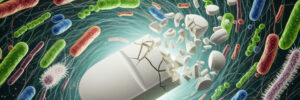
In pharmacology, one of the most significant challenges is the variability in how patients respond to the same drug. While factors like genetics and lifestyle are known to play a role, emerging research points to a hidden player: the human gut microbiota. This vast community of trillions of microbes is an active participant in our health, influencing everything from nutrient absorption to the efficacy of our medications. Using advanced computational tools like SIRIUS to analyze mass spectrometry data, researchers investigated how gut microbiota alter the chemical structure of GPCR drugs.

Read More »
Collaborations

How to… Constrain the Molecular Structure Search Space with Chemical Labeling

Unlocking the chemical ‘dark matter’ in metabolomics is a persistent challenge. A new approach addresses this by integrating derivatisation reactions for chemical labeling directly into the mass spectrometry workflow. It provides crucial structural information which is fed into small molecule annotation tools like SIRIUS to significantly constrain the molecular structure search space and boost annotation accuracy, even for previously undiscovered compounds. This powerful approach offers a scalable solution to unlock the vast, uncharted chemical space of the metabolome.

Read More »
Tutorials

How to… Screen for Transformation Products with SIRIUS

Detecting transformation products is crucial for environmental monitoring, as these byproducts can be more toxic and persistent than their precursor compounds. This tutorial walks you through using SIRIUS for a non-targeted combined precursor and transformation product screening, from generating a transformation product database to analysing LC-HRMS data in SIRIUS and validating results.

Read More »
Wooden pipe in the forest from which spring water flows
Application Notes

Detecting pharmaceuticals and their transformation products with SIRIUS

Pharmaceutical pollution poses risks to ecosystems and human health, yet traditional annotation methods often miss transformation products—drug breakdown compounds that may be even more persistent. We demonstrate how SIRIUS enhances annotation of pharmaceuticals in Luxembourgish rivers, from precursor drug screening to transformation product screening. Our approach for environmental monitoring is relevant not only for pharmaceuticals but also for pesticides and industrial chemicals, whose degradation products may have significant environmental impacts.

Read More »
Ketamine’s potential for treating neurological diseases such as depression, PTSD, and chronic pain has sparked significant interest within the medical and scientific communities. (Photo by Robina Weermeijer on Unsplash.)
Discoveries

Ketamine distribution in the brain: understanding drug metabolism with SIRIUS

Ketamine is known for its dual role as an anesthetic and an emerging antidepressant. Despite its long-standing clinical use, the metabolic pathways and pharmacokinetics of ketamine remain poorly understood. A study of ketamine metabolism in the pig brain using SIRIUS provides valuable insights into the distribution of ketamine and its metabolites in different areas of the brain.

Read More »
Microbial breakdown, facilitated by microorganisms like bacteria and fungi, plays a pivotal role in decomposing organic matter. (Image by Thomas Breher on Pixabay)
Discoveries

SIRIUS on the body farm: Investigating microbial decomposers

Microbial decomposers break down human remains, recycling nutrients and influencing ecosystem dynamics. Is there a universal microbial decomposer network that assembles in response to mammalian remains? How does the network and the cadaver-derived nutrient pool change during the decomposition process and can this microbial community change be used for predicting time since death for forensic purposes?

Read More »
Current wastewater treatment plants often struggle to effectively remove antibiotics and their transformation products.
Discoveries

Biotransformation of antibiotics in wastewater: A fungal solution investigated with SIRIUS

Antibiotics are crucial for fighting bacterial infections, but the rise of antibiotic resistance poses a serious threat to public health. Beyond healthcare, the presence of antibiotic residues in wastewater exacerbates the problem. Conventional treatment methods often fall short in adequately removing these compounds, perpetuating resistance. Biological processes, such as biotransformation by fungi, have emerged as promising alternatives. Researchers investigated the potential of fungi to transform antibiotics, using SIRIUS and CSI:FingerID to identify degradation products.

Read More »