Identifying the botanical origins of yellow dyes in ancient textiles is a notorious challenge due to the chemical overlap of common pigments across different plant species. This study introduces a robust metabolomics workflow designed to move beyond ubiquitous molecules like quercetin to find species-specific “Gold” chemical markers using SIRIUS.
News
Novel Phenolic Compound in Fern
The specialized metabolism of ferns remains a largely untapped frontier in the search for natural medicinal compounds. Using SIRIUS molecular structure annotation, researchers successfully identified a previously unknown lignan named blechnic acid B. This novel compound, found in Neoblechnum brasiliense, highlights the chemical diversity hidden within under-investigated plant lineages.
Chemical Dark Matter of the Amazon’s Iron Caves
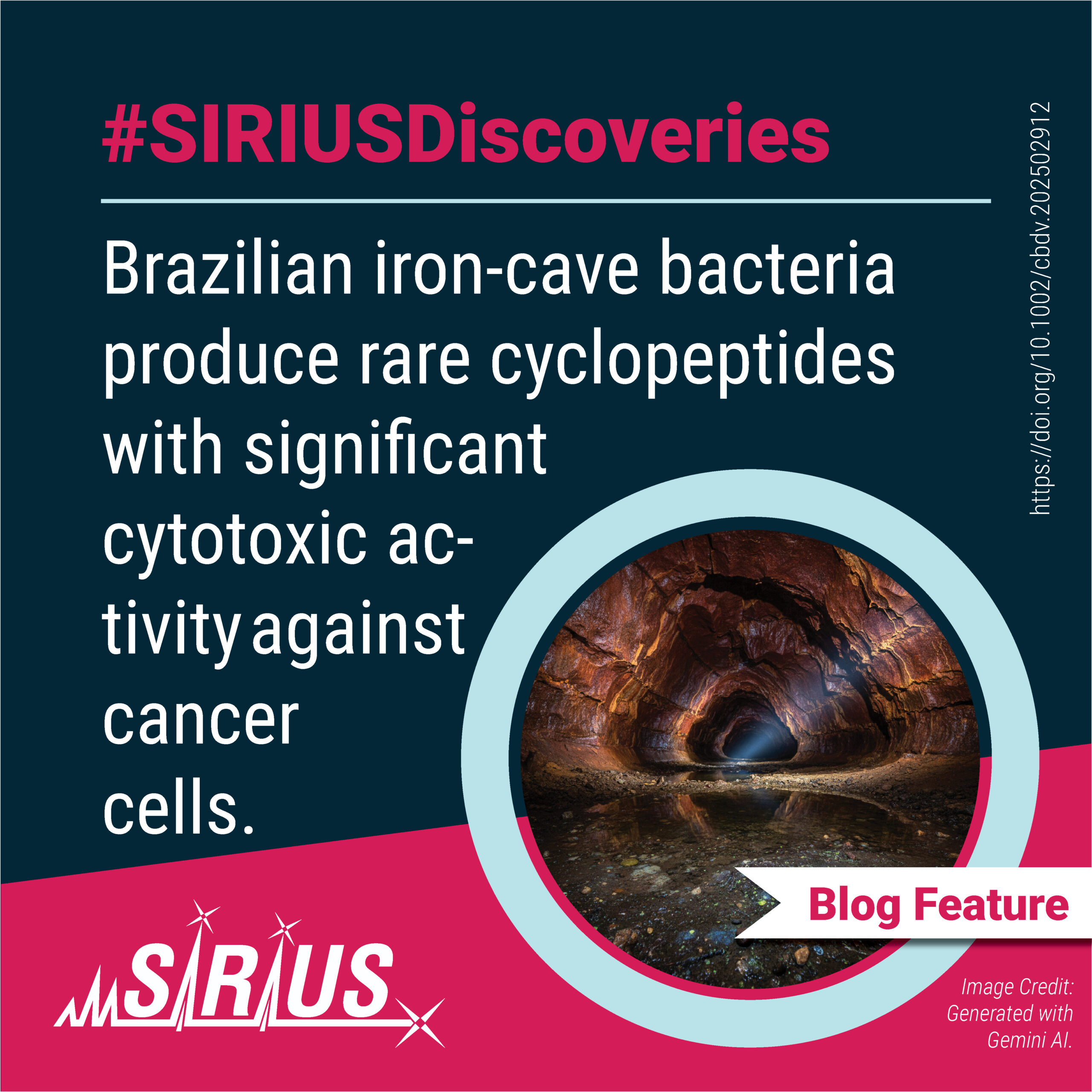
Deep within the aphotic zones of the Amazon’s ferruginous caves, a hidden world of microbial “dark matter” holds immense potential as a source for pharmacological innovation. A pioneering metabolomic survey of these extreme environments isolates rare bacterial genera that thrive in these iron-rich landscapes. They use SIRIUS to identify and classify chemical features, including potent cyclopeptides demonstrating growth inhibition against cancer cell lines.
Revealing the Hidden Burden of Offshore Discharges
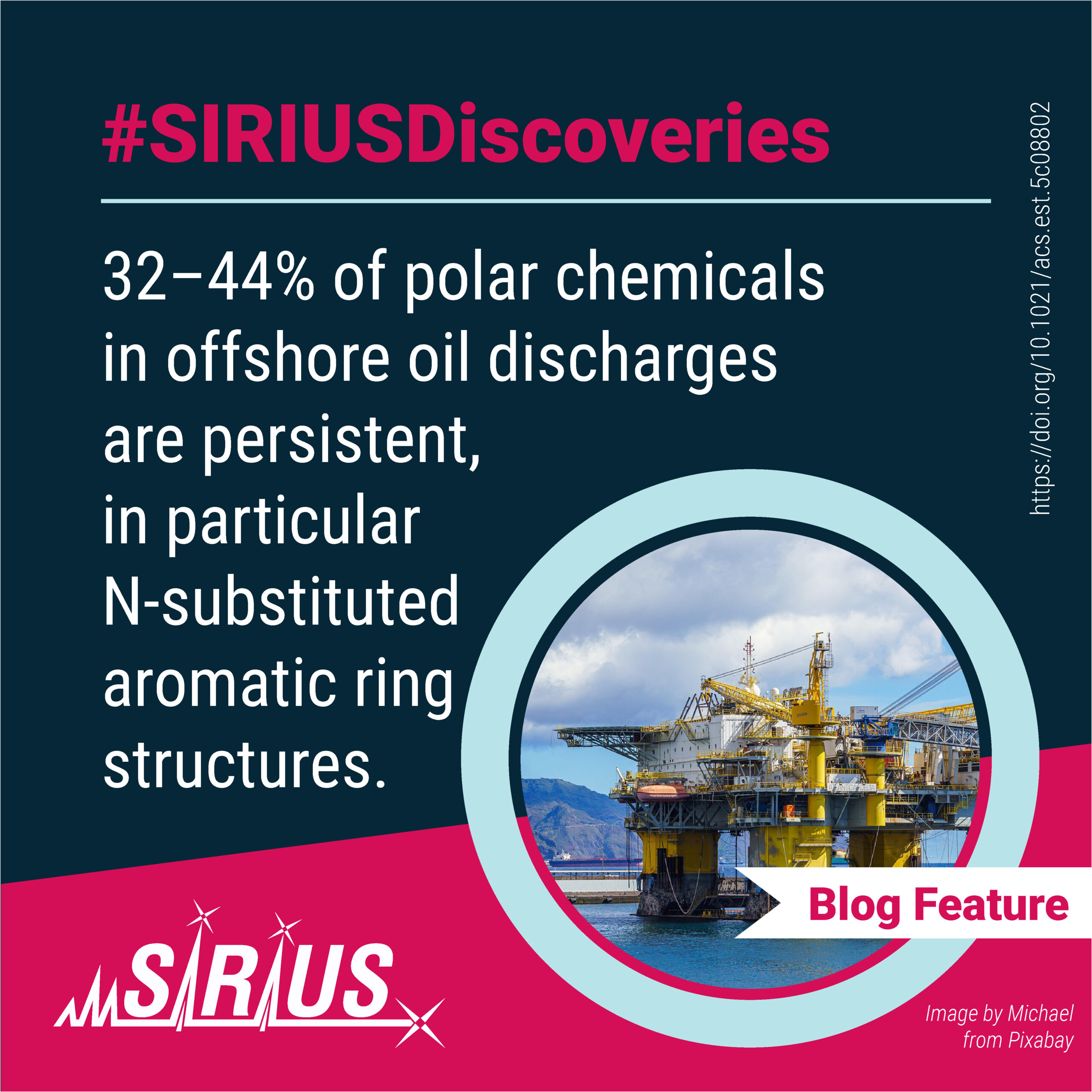
Offshore produced water discharges introduce over 240 billion liters of complex chemical mixtures into the marine environment annually. In a case study using produced water from North Sea offshore oil platforms, researchers demonstrated that traditional monitoring significantly underestimates the persistence of discharged chemicals. They introduce a novel analytical framework using advanced non-target analysis and computational workflows, including SIRIUS to highlight a significant “hidden burden” of persistent pollutants.
Environmental and Maternal Drivers of the Infant Gut Metabolome
The maturation of the gut microbiome during the first six months of life is a foundational process, playing a key role in metabolic programming and training of the immune system, but these patterns remain critically underexplored in populations from low- and middle-income countries. To address this gap, an observational, longitudinal study profiled the developing gut microbiome and metabolome in Bangladesh using a multi-omics approach. Systematic classification and metabolite annotation was achieved using SIRIUS. The overall aim was to understand how maternal and environmental factors—specifically delivery mode, maternal milk composition, and household water treatment—shape this foundational postnatal development.
Influence of gut microbiota on drug efficacy
In pharmacology, one of the most significant challenges is the variability in how patients respond to the same drug. While factors like genetics and lifestyle are known to play a role, emerging research points to a hidden player: the human gut microbiota. This vast community of trillions of microbes is an active participant in our health, influencing everything from nutrient absorption to the efficacy of our medications. Using advanced computational tools like SIRIUS to analyze mass spectrometry data, researchers investigated how gut microbiota alter the chemical structure of GPCR drugs.
SIRIUS in the Jena Experiment
In a biodiverse ecosystem, it’s often assumed that plants have safety in numbers—that a mix of species will confuse pests and dilute disease pressure, allowing individual plants to save energy on defences and focus on growth. But is this ecological truism always the case? A recent study from the long-running Jena Experiment uses untargeted metabolomics and SIRIUS for feature annotation and compound class prediction. They found that for many plants in a diverse community it is less about relaxing their defences and more about adapting to intense competition for light and nutrients.
SIRIUS in Space: The ISS metabolome
As we prepare for longer human missions beyond Earth, understanding the invisible ecosystems of space habitats has become critical for astronaut health. The International Space Station (ISS) is not just a home and laboratory—it is also a closed microbial and chemical environment unlike anything on Earth. This study mapped the ISS microbiome and metabolome in unprecedented detail, uncovering its vast chemical “dark matter” using SIRIUS.
Screening Massive Small Molecule Libraries for Early Drug Discovery
Our recent study co-authored by researchers at Bright Giant, FSU Jena, Leiden University and Oncode Institute introduces a major leap forward in affinity selection screening for early drug discovery: Self-Encoded Libraries. Our approach uses advanced mass spectrometry to screen hundreds of thousands of small molecules in a single experiment, bypassing the significant limitations of traditional high-throughput screening as well as affinity selection with barcoded libraries. It allows drug discovery teams to identify high-affinity drug candidates faster, more affordably, and against targets previously inaccessible to common screening methods.