The Hidden Potential of Cave Microbiomes
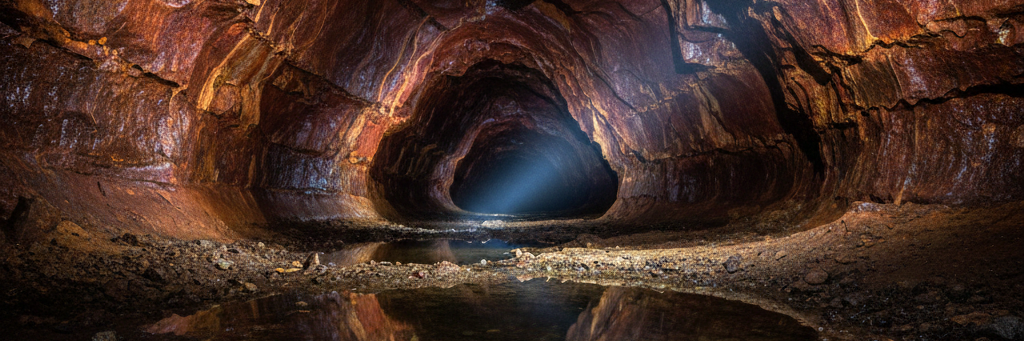
Cave ecosystems possess significant potential for the discovery of novel biotechnological and pharmaceutical resources. Yet, extreme conditions—total darkness, nutrient scarcity, and high concentrations of iron ore—keep these environments largely understudied. While iron-rich caves are common in Brazil, their microbial and chemical landscapes are poorly understood. The primary scientific challenge lies in the low cultivability of cave bacteria—estimated at only 0.02%1—and pristine deep-zone sampling areas are notoriously difficult to reach2.
Deep-cave sampling in the National Forest of Carajás
To overcome these barriers, researchers from the Universidade de São Paulo and the Instituto Tecnológico da Vale Desenvolvimento Sustentável investigated the chemical diversity and cytotoxic potential of bacteria from these extreme habitats3. The team isolated eight bacterial strains from the aphotic (dark) zone of an iron cave in the in the Brazilian Amazon’s National Forest of Carajás. After classifying these strains into five genera—Serratia, Bacillus, Enterococcus, Aneurinibacillus, and Comamonas—the team used untargeted liquid chromatography-tandem mass spectrometry (LC-MS/MS) to characterize their chemical profiles and screen for cytotoxic activity against tumor cell lines.
Automated annotation and class prediction with SIRIUS
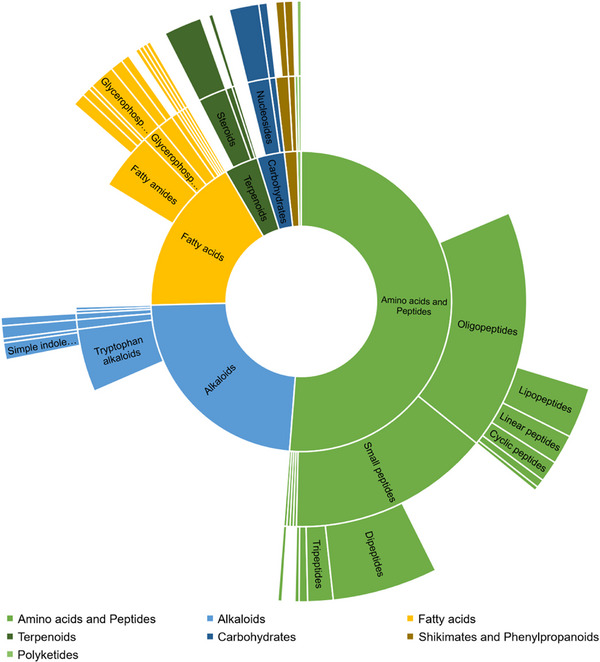
The team decoded the complex chemical profiles of the cave isolates by processing data through feature-based molecular networking (FBMN) and SIRIUS. Using SIRIUS, the researchers successfully annotated molecular formulas for 674 detected features. SIRIUS also automatically assigned these features to chemical classes and annotated chemical structures.
Cyclopeptides with high cytotoxic potential
Integrating SIRIUS with molecular networking allowed the team to pinpoint significant compound classes—including cyclopeptides, cholic acid derivatives, and indole alkaloids—shared across distinct bacterial genera. A key discovery identified Gramicidin S analogs as a primary class produced by Aneurinibacillus, Comamonas, and Enterococcus. Crude extracts from these three genera demonstrated significant cytotoxicity, achieving nearly 100% growth inhibition against HCT-116 (colorectal carcinoma) and 501mel (metastatic melanoma) tumor cell lines. Supervised multivariate analysis directly linked these Gramicidin S-type cyclopeptides to the observed anti-tumor activity, identifying them as the key discriminant features.
The immense potential of the chemical dark matter
This study underscores the immense potential of cave-dwelling bacteria as a source for pharmacological innovation. By using SIRIUS, the research team could quickly navigate the “chemical dark matter” of this extreme environment. By providing reliable compound classifications and pathway predictions, SIRIUS establishes a powerful workflow for discovering bioactive scaffolds in the world’s most under-explored niches.
References
- K. E. Bender, K. Glover, A. Archey, and H. A. Barton. The Impact of Sample Processing and Media Chemistry on the Culturable Diversity of Bacteria Isolated From a Cave. Int. J. Speleol. (2020) https://doi.org/10.5038/1827-806X.49.3.2337 ↩︎
- Z. Cyske, W. Jaroszewicz, M. Żabińska, et al. Unexplored Potential: Biologically Active Compounds Produced by Microorganisms From Hard-to-Reach Environments and Their Applications. Acta Biochim. Pol. (2021) https://doi.org/10.18388/abp.2020_5887 ↩︎
- N. N. Kato, A. F. Cardoso, B. D. B. Sahm, L. V. Costa‐Lotufo, J. A. P. Bitencourt, N. P. Lopes. Microbial Chemical Diversity and Cytotoxic Potential From Brazilian Ferruginous Caves: A Pioneering Metabolomic Survey. Chem. Biodivers. (2026) https://doi.org/10.1002/cbdv.202502912 ↩︎
- N. N. Kato, A. F. Cardoso, B. D. B. Sahm, L. V. Costa‐Lotufo, J. A. P. Bitencourt, N. P. Lopes. Microbial Chemical Diversity and Cytotoxic Potential From Brazilian Ferruginous Caves: A Pioneering Metabolomic Survey. Chem. Biodivers. (2026) https://doi.org/10.1002/cbdv.202502912 ↩︎