The Burden of Offshore Discharges
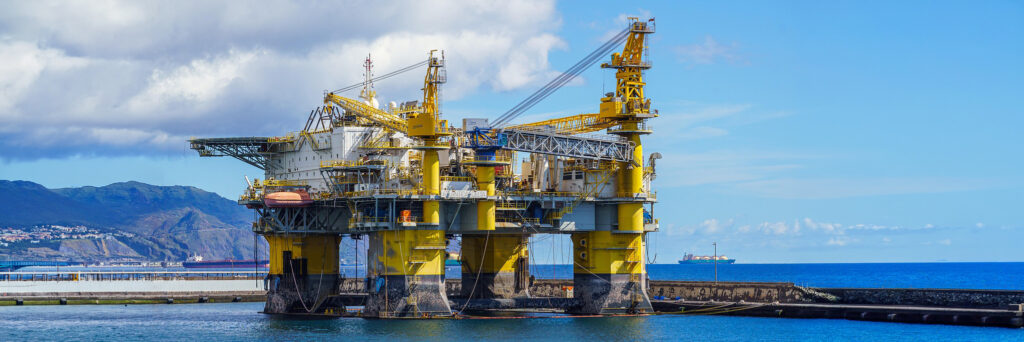
The global ocean provides critical ecosystem services, from oxygen production to food security. However, these services are increasingly compromised by industrial discharges, most notably produced water—a complex byproduct of offshore oil and gas extraction. In the North and Norwegian Seas, annual discharges exceed 240 billion liters, introducing approximately 3,400 tonnes of dispersed oil and 160,000 tonnes of chemical additives into the marine environment1. The question isn’t just how much we are dumping, but how long it stays there.
The Problem of Persistence
While some chemicals degrade rapidly, the continuous discharge of persistent substances is a major concern. These chemicals can accumulate over time, increasing the risk of irreversible adverse effects on wildlife and humans2. Regulatory frameworks like the OSPAR Convention aim to phase out hazardous substances, but they often rely on individual chemical assessments and standardized biodegradation tests3. These traditional standardized biodegradation tests are insufficient to keep pace with the growing chemical landscape4. Society is likely discharging highly persistent chemicals without empirical data on the extent of the problem.
Persistence-Directed Testing
A recent study led by Mette T. Møller and Philipp Mayer (Technical University of Denmark) introduces “Persistence-Directed Testing,” a novel approach to assessing complex industrial discharges5. This approach integrates an experimental biodegradation setup with advanced non-target analysis (NTA) to move beyond predefined chemical targets and discover the “hidden burden” of persistent chemicals in offshore discharges. The researchers expanded chemical space coverage by utilizing a dual-platform approach: GC-MS targeting nonpolar chemical fractions and LC-HRMS targeting polar chemical fractions. By comparing samples before and after a 60-day biodegradation period, “persistent” features were defined as those exhibiting less than 50% degradation6.
A wake-up call for environmental monitoring
The researchers investigated produced water from North Sea oil platforms to determine the number and fraction of persistent chemicals. They revealed a stark contrast in the environmental fate of nonpolar versus polar chemical fractions. While current monitoring often emphasizes nonpolar hydrocarbons, the data suggests that the “hidden burden” lies within the polar fraction.
In the nonpolar fraction (analyzed via GC-MS), only 3% to 4% of the detected features were classified as persistent. The majority of petrochemical constituents, including typical indicators like alkylated benzenes and naphthalenes, underwent near-complete biodegradation, suggesting that they are efficiently handled by native microbial communities.
In the polar fraction (analyzed via LC-HRMS), between 32% and 44% of the detected features remained after 60 days, indicating high persistence. This represents a massive chemical reservoir that is currently bypassing environmental treatment processes. Most concerning is the lack of characterization for these substances; 91.5% of the persistent polar features remained unidentified at the start of the study, highlighting a vast gap in empirical data regarding the identity and toxicity of offshore discharges.
The Role of SIRIUS in Molecular Elucidation
To provide molecular insights into this persistent fraction of polar features, the team employed SIRIUS to assign molecular formulas, chemical classes, and tentative structures.
Out of 343 features assigned molecular formulas, 145 were confirmed as persistent. The most prevalent molecular category was identified as CxHxNO, which predominantly consists of N-substituted aromatic ring structures. Chemical classes were predicted to categorize these persistent “unknowns” into broader groups such as organic nitrogen compounds, hydrocarbon derivatives, and benzenoids. Through structural elucidation, the researchers identified specific persistent chemicals such as acridone, 3-acetylindole, and 2-hydroxyquinoline. These compounds are likely petroleum-related or stable transformation products rather than added production chemicals.
Discoveries achieved with SIRIUS:
- The prediction of molecular formulas for 343 features, including 145 persistent ones.
- The identification of CxHxNO as the molecular formula category containing the highest number of persistent chemicals.
- The classification of persistent features into groups such as organic nitrogen compounds, hydrocarbon derivatives, organic oxygen compounds, and benzenoids.
- Structural elucidation of 36 persistent chemicals using top-ranked in silico candidates
Conclusion
The results confirm that standard GC-MS methods significantly underestimate the chemical persistence of offshore industrial discharge. While the nonpolar “oil” components may degrade, we are likely discharging vast quantities of persistent polar chemicals unnoticed, bypassing current treatment and monitoring protocols and posing a long-term risk of accumulation in the marine environment. The fact that over 90% of persistent polar features remain unidentified highlights a critical gap in our understanding of marine chemical pollution.
Shifting environmental regulation toward a goal of zero persistent chemical discharge will require the integration of non-target analysis and computational workflows such as SIRIUS into standard monitoring programs. Only by identifying the “hidden burden” can we begin to mitigate the long-term, potentially irreversible risks to marine ecosystems and human health.
References
- ODMIS OSPAR Discharges, Spills and Emissions from Offshore Oil and Gas Installations; OSPAR Data & Information Management System. https://odims.ospar.org/en/search/?dataset=discharges_offshore. accessed 2025–April–21. ↩︎
- Cousins, I. T.; Ng, C. A.; Wang, Z.; Scheringer, M. Why Is High Persistence Alone a Major Cause of Concern?. Environ. Sci. Process Impacts 2019, 21 (5), 781– 792, DOI: 10.1039/C8EM00515J ↩︎
- Marappan, S.; Stokke, R.; Malinovsky, M. P.; Taylor, A. OSPAR’s Quality Status Report 2023; OSPAR: London, 2022. ↩︎
- Strempel, S.; Scheringer, M.; Ng, C. A.; Hungerbühler, K. Screening for PBT Chemicals among the “Existing” and “New” Chemicals of the EU. Environ. Sci. Technol. 2012, 46 (11), 5680– 5687, DOI: 10.1021/es3002713 ↩︎
- Møller MT, Birch H, Sjøholm KK, Papazian S, Wennberg AC, Bonnefille B, Kronsbein PM, Kelland MA, Martin JW, Mayer P. Persistence-Directed Testing of Chemicals Discharged from Offshore Oil Platforms Combined with Nontargeted Analysis. Environ Sci Technol. 2025 Nov 11;59(44):24000-24011. doi: 10.1021/acs.est.5c08802. Epub 2025 Oct 29. PMID: 41160886; PMCID: PMC12613808. ↩︎
- Parliament, E. Regulation (EC) No 1907/2006 of the European Parliament and of the Council of 18 December 2006; Official Journal of the European Union, 2006; pp. 1– 849. ↩︎