The Battle Against Oxidative Stress: Searching for Natural Allies
Oxidative stress drives many human diseases. It occurs when cellular free radicals accumulate faster than our natural antioxidant defences can clear them. Factors like pollution, chronic fatigue, viral infections, and environmental toxins trigger this imbalance1. The resulting accumulation of reactive oxygen species (ROS) inflicts severe damage on cell membranes. Over time, this cellular damage drives the progression of chronic illnesses, such as cancer, chronic inflammation, and neurodegenerative diseases2.
One major ROS source is the NADPH oxidase (NOX) family, a group of seven membrane enzymes that generate free radicals in the body3. Modulating these enzymes offers a powerful therapeutic strategy. Natural compounds like apocynin and resveratrol are known NOX modulators4. This makes NOX a promising target for new antioxidant drugs.
An Old Tree, an Unmapped Chemistry
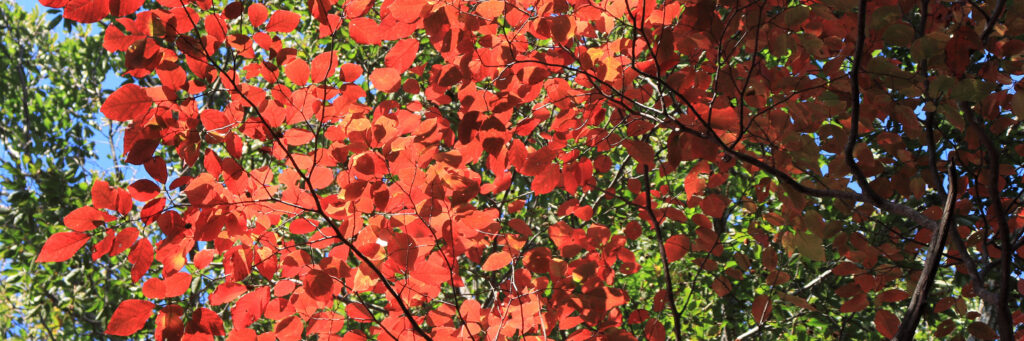
Neoshirakia japonica is a deciduous tree from East Asia5. Traditional medicine used its leaves and root bark to relieve joint pain, fatigue, and overstrain6. Despite this long history of use, nobody had ever mapped its full chemical profile. Researchers from Korea University and Chungbuk National University set out to close this gap7. The team extracted both the aerial part and the root of N. japonica. They analyzed each extract with UHPLC-Orbitrap mass spectrometry. Then they built feature-based molecular networks (FBMN) in GNPS to cluster related compounds. This produced 74 clusters of MS features for the whole-extract comparison, and another 41 clusters for a solvent-fraction breakdown of the aerial part. Each cluster group needed annotation. This is where SIRIUS entered the workflow.
SIRIUS Takes on Multi-Layer Annotation
The researchers processed every MS2 dataset with SIRIUS 6, alongside GNPS spectral matching. They used the four core annotation methods of SIRIUS, each adding a new layer of chemical evidence.
(1) Molecular formula annotation gave the team a reliable formula for each feature as a foundation for the subsequent annotation steps. (2) Molecular structure annotation predicted molecular fingerprints from the MS/MS spectra and fragmentation trees and matched these fingerprints against extensive compound databases to identify candidate structures, even for compounds without a spectral library hit. (3) Compound class prediction assigned compound classes to each feature, which proved essential for organizing the large FBMN networks. It categorised unisolated metabolites even when exact structural matches did not exist in reference databases. It grouped features into ellagitannins, benzoic acid derivatives, and phenylpropanoids. This structure helped the team spot patterns across clusters instead of annotating peaks one by one. And finally, when database searches came up empty, (4) de novo structure prediction generated completely de novo chemical structures. This proved to be the most consequential step.
From De Novo Prediction to Reality
The most exciting narrative in this study revolves around Peak x (observed at m/z 509.1299), which the researchers detected specifically in the root extract. No database contained a matching structure for this mass spectrum. The team turned to SIRIUS de novo structure prediction to solve this puzzle.
SIRIUS proposed that the unknown compound was a glycoside of apocynin—specifically, apocynin-4-O-β-D-(6′-O-syringyl)glucopyranoside. Since apocynin is a legendary benchmark inhibitor of the ROS-generating NOX family, this prediction was a testable, concrete hypothesis, which inspired the researchers to target this molecule for in-depth biological testing. They ran column chromatography to purify the compound and confirm its structure with full 1D and 2D NMR. The final structure revealed that SIRIUS’ prediction was close to accurate, with an almost identical phenolic-glycoside backbone and a slightly different arrangement. The team named this brand-new, previously undescribed natural compound neoshioside A.
The NOX5-Neoshioside A Complex
The structural similarity to apocynin prompted the authors to perform in silico molecular docking studies. They docked neoshioside A against the 3D structures of human NOX2 and NOX5, and exhibited strong to exceptional binding affinitied for both. To verify if this binding was stable in a dynamic biological environment, they ran a 100 ns molecular dynamics simulation of the NOX5-neoshioside A complex in a water system. The protein structure remained highly stable. The ligand adjusted its pose early on and then locked into a highly stable equilibrium. In vitro validation confirmed these computational predictions.
A Second Discovery: Uncovering Hidden Ginsenosides in the Spurge Family
SIRIUS compound class prediction also helped the team spot a second, unexpected result. In one cluster of the FBMN network, SIRIUS and GNPS tentatively annotated several nodes as ginsenosides (dammarane-type saponins). Historically, scientists associated these famous, pharmacologically active compounds almost exclusively with the ginseng family (Araliaceae). Saponins previously reported in the spurge family were predominantly oleanane- and lupane-types; dammarane-type saponins had never been recorded. NMR spectroscopy confirmed the chemical structures of five ginsenosides.
How SIRIUS Makes a Difference in Untargeted Analysis
This paper shows what a full annotation stack can do when applied systematically. Molecular formula and molecular structure annotation, compound class prediction, and de novo structure prediction — each contributed a different piece of evidence. Together, they turned a plant with zero prior chemical characterization into a source of two genuine discoveries: a first-in-family saponin class, and a new antioxidant natural product with a defined, testable protein target.
SIRIUS pointed the team toward one specific peak, out of dozens in the network, as worth isolating and characterizing by hand. Although de novo structure prediction did not deliver the final answer, it delivered direction. It transformed an ambiguous, low-confidence MS feature into a specific, isolable target. Without that signal, peak x might have stayed an “unidentified” line in a data table. While structure elucidation by NMR remains the gold standard for confirmation, SIRIUS narrowed an intractable search space down to a short list of real candidates. In untargeted metabolomics, that triage function, telling researchers where to look, is often as valuable as getting the structure right on the first try.
Bring SIRIUS to your botanical ingredients
Plant extracts are full of compounds no library has seen, including antioxidants like the one found here. Learn how SIRIUS helps characterise active ingredients on our Cosmetics and personal care page, and discover the full range of SIRIUS features.
This study was neither conducted nor financed by Bright Giant.
K.S. Lee, S. Kim, L.B. Vinh, J.S. Han, B.Y. Hwang, M.K. Lee, K.Y. Lee. Exploration of Phytochemical Constituents in Neoshirakia japonica by LC-MS and In Silico Evaluation of a New Antioxidant Targeting the NOX Family. Antioxidants (2026) https://doi.org/10.3390/antiox15081023
References
- Q. Rascón-Cruz, T.S. Siqueiros-Cendón, L.I. Siañez-Estrada, C.M. Villaseñor-Rivera, L.E. Ángel-Lerma, J.A. Olivas-Espino, D.B. León-Flores, E.A. Espinoza-Sánchez, S. Arévalo-Gallegos, B.F. Iglesias-Figueroa. Antioxidant Potential of Lactoferrin and Its Protective Effect on Health: An Overview. Int. J. Mol. Sci. (2025) https://doi.org/10.3390/ijms26010125 ↩︎
- M. Carocho, I.C.F.R. Ferreira. A review on antioxidants, prooxidants and related controversy: Natural and synthetic compounds, screening and analysis methodologies and future perspectives. Food Chem. Toxicol. (2013) https://doi.org/10.1016/j.fct.2012.09.021 ↩︎
- M.S. Petrônio, M.L. Zeraik, L.M. Fonseca, V.F. Ximenes. Apocynin: Chemical and biophysical properties of a NADPH oxidase inhibitor. Molecules (2013) https://doi.org/10.3390/molecules18032821 ↩︎
- T. Maraldi. Natural compounds as modulators of NADPH oxidases. Oxid. Med. Cell. Longev. (2013) https://doi.org/10.1155/2013/271602 ↩︎
- L. Hen. Flora reipublicae popularis sinicae. Inst. Bot. Kummingense Acad. Sin. (1979) ↩︎
- X.Z. Lai, Y.B. Yang, X.L. Shan. The investigation of Euphorbiaceous medicinal plants in Southern China. Econ. Bot. (2004) https://doi.org/10.1663/0013-0001(2004)58 ↩︎
- K.S. Lee, S. Kim, L.B. Vinh, J.S. Han, B.Y. Hwang, M.K. Lee, K.Y. Lee. Exploration of Phytochemical Constituents in Neoshirakia japonica by LC-MS and In Silico Evaluation of a New Antioxidant Targeting the NOX Family. Antioxidants (2026) https://doi.org/10.3390/antiox15081023 ↩︎