We’re thrilled to share our SIRIUS contributions at Metabolomics 2025 in Prague! 🇨🇿
We can’t wait to engage with the metabolomics community, share our expertise, and showcase how SIRIUS 6 is empowering more confident, comprehensive analyses.
We’re thrilled to share our SIRIUS contributions at Metabolomics 2025 in Prague! 🇨🇿
We can’t wait to engage with the metabolomics community, share our expertise, and showcase how SIRIUS 6 is empowering more confident, comprehensive analyses.
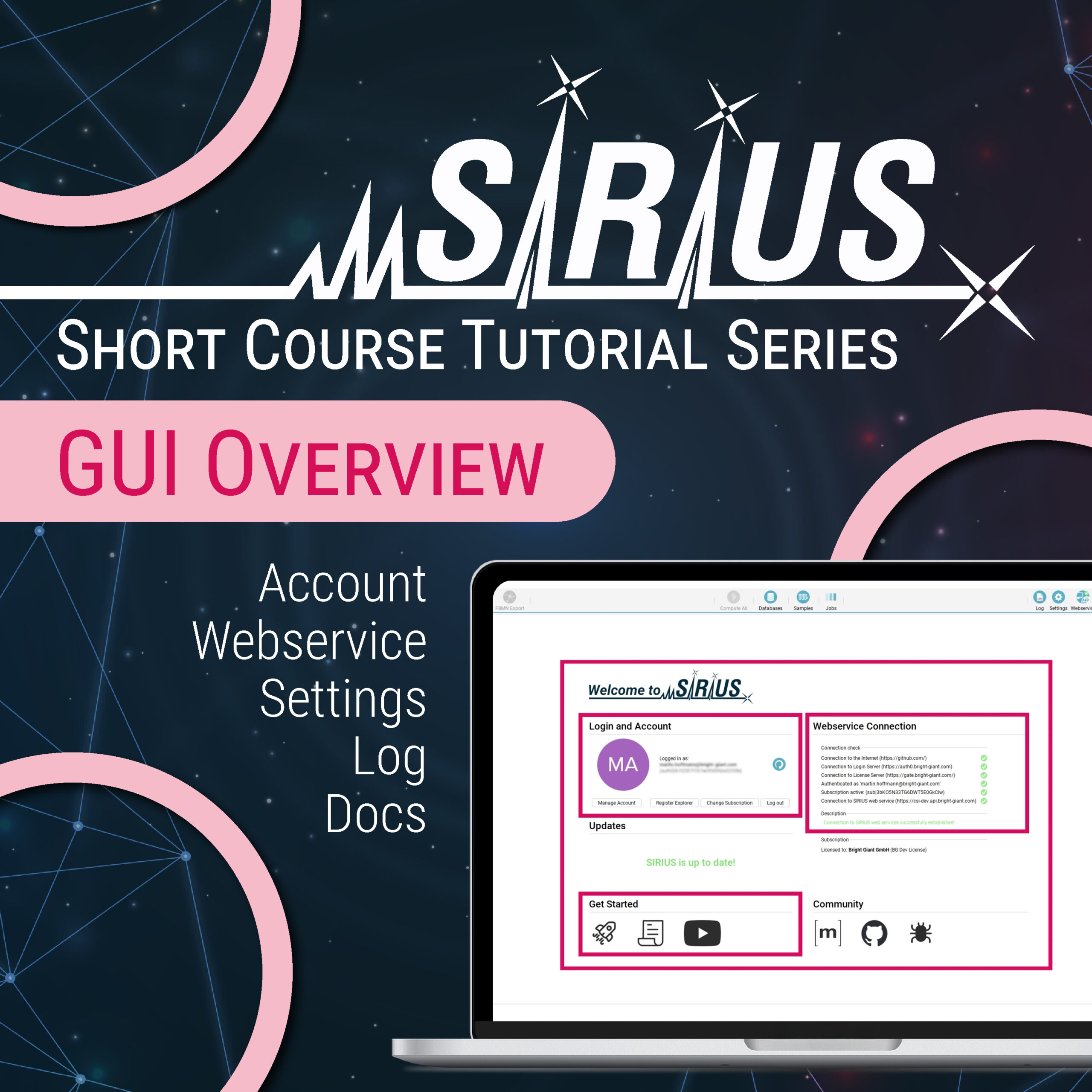
We are excited to announce our new tutorials on YouTube! Whether you’re a new user or looking to refresh your skills, our tutorials will guide you through the essential features of SIRIUS 6 to help you get the most out of your data.
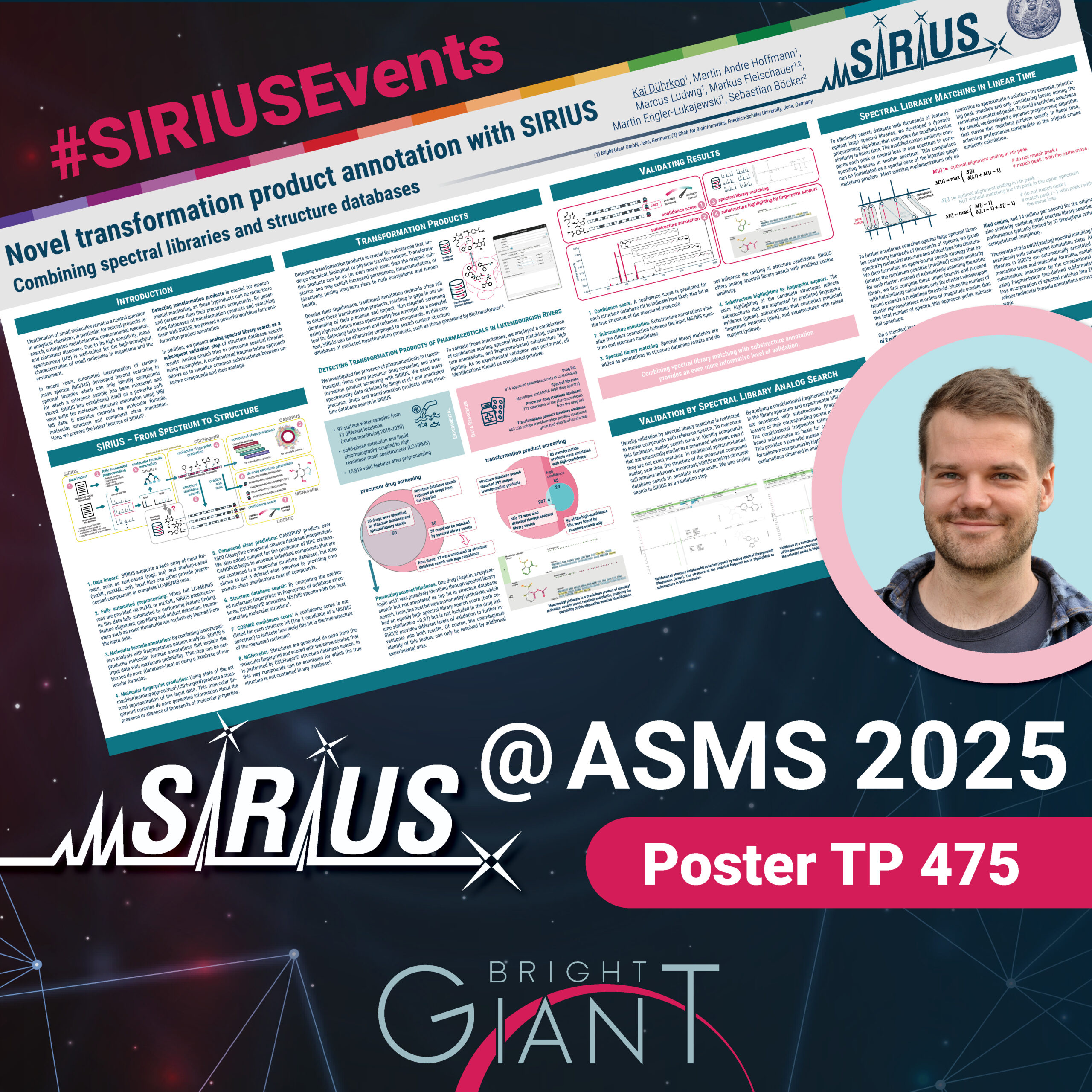
Learn how SIRIUS empowers the annotation of transformation products, crucial for environmental monitoring, and how we’re validating results with spectral library analog search.
Come by to learn more about SIRIUS and discuss how it can accelerate your research!
What began as an academic project for molecular formula identification has grown into an all-in-one software solution for small molecule identification that combines powerful structure annotation methods with multiple validation levels.
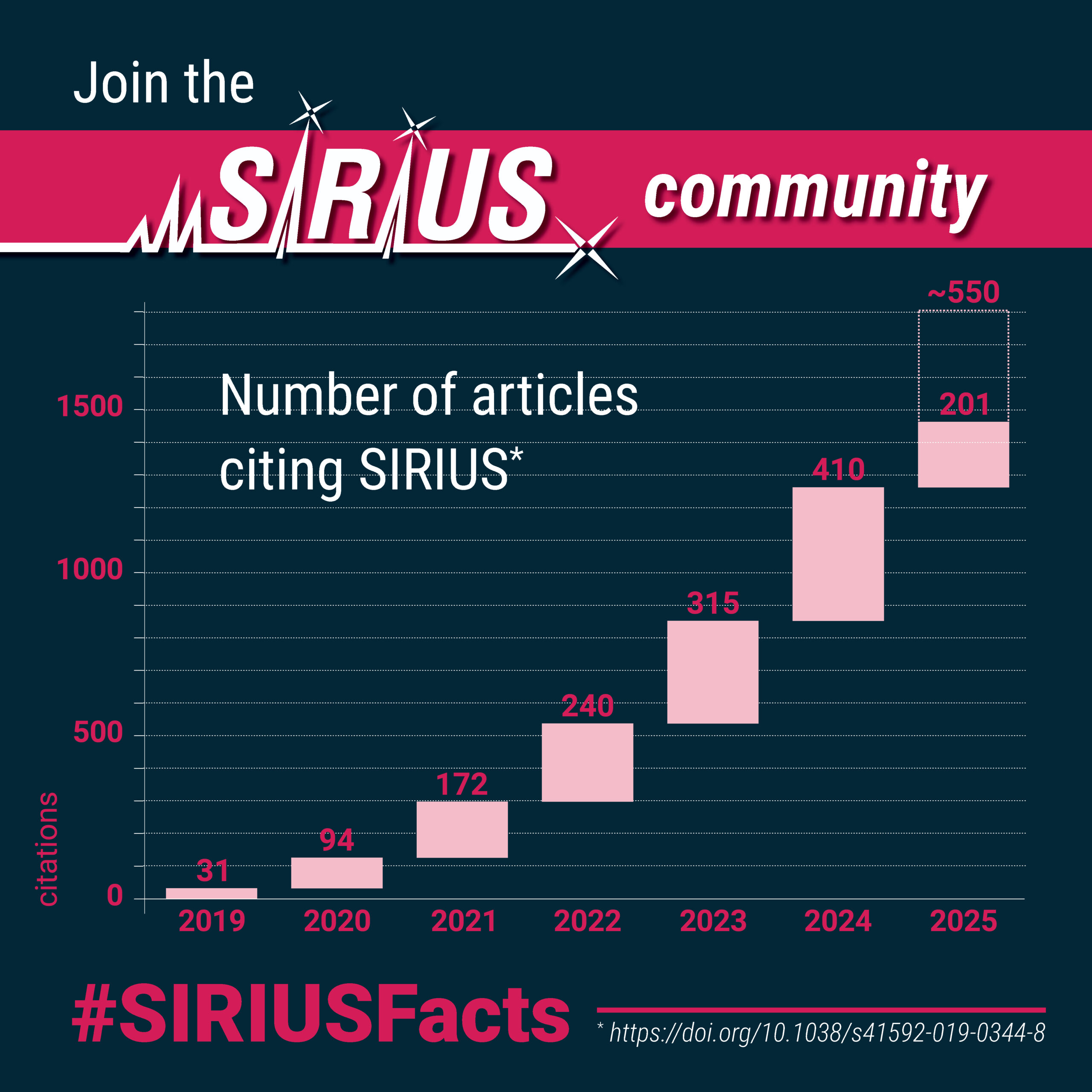
SIRIUS is widely recognized and trusted within the global scientific community, processing millions of queries each year. A huge thank you to all the users for years of collaborative development and contributions and for the trust and value you are placing in SIRIUS.
Would you like to get started or are you curious about how SIRIUS can support your work? This is a great time to get involved.
We’re excited to see how researchers and partners are showcasing SIRIUS for small molecule annotation, even in the most complex analytical workflows.
Don’t miss the chance to gain first-hand insights.
Join us as we showcase SIRIUS, the all-in-one software solution for comprehensive small molecule annotation. SIRIUS revolutionizes your mass spectrometry analysis with its AI-driven methods for small molecule structure elucidation.
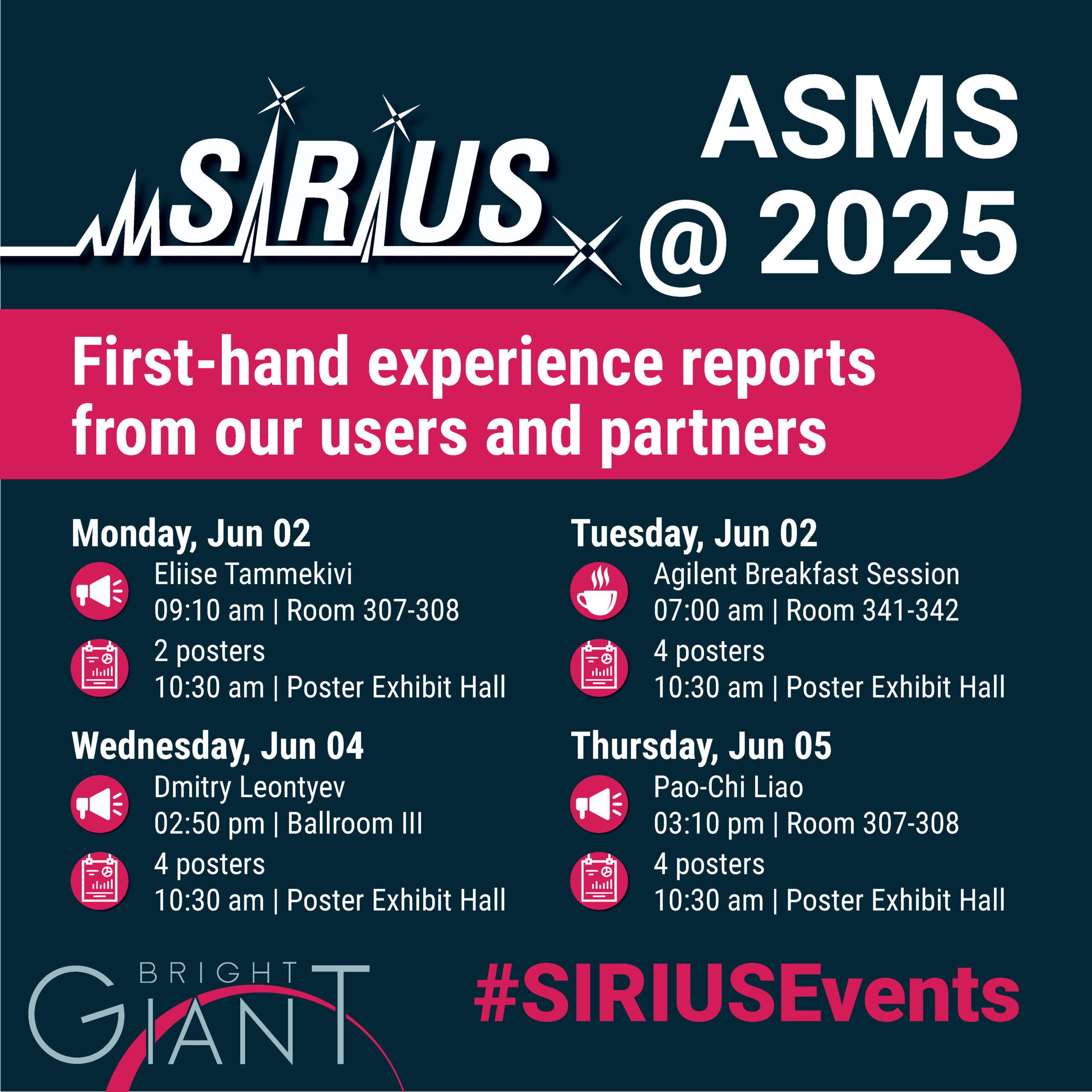
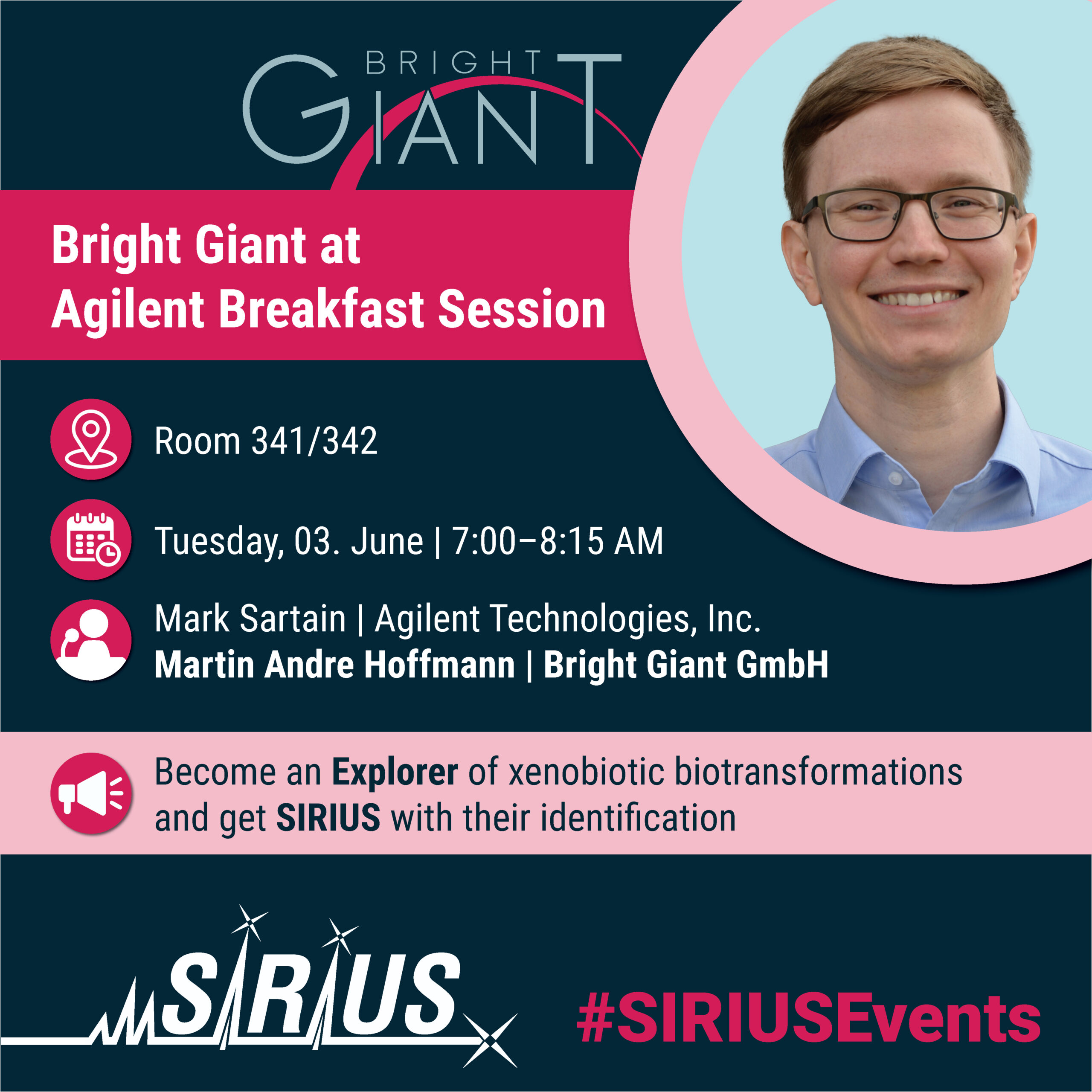
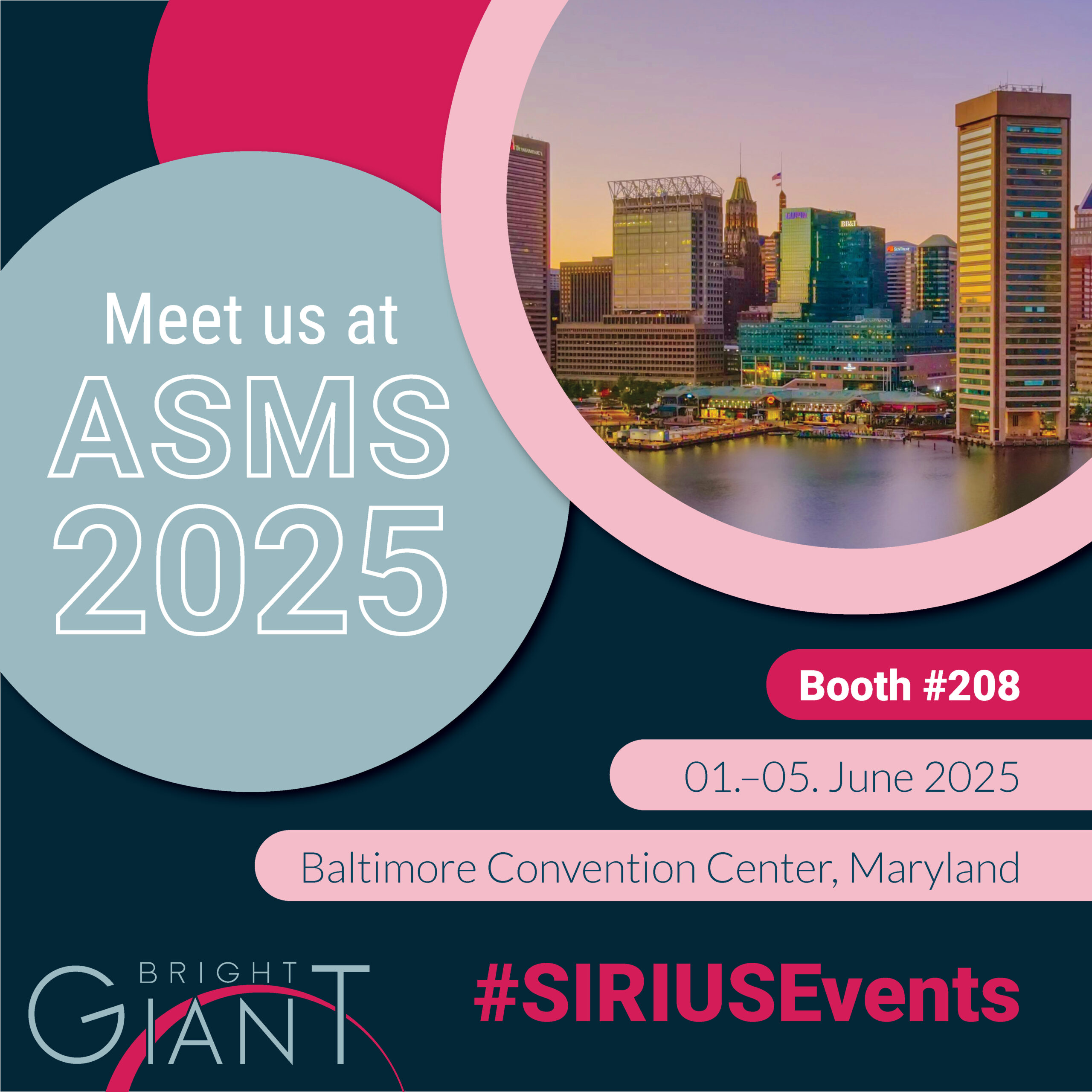
Visit us at Booth #208. Our team is looking forward to connect and exchanging ideas with you.
Chemical breakdown products of pharmaceuticals, pesticides, or industrial chemicals can be more persistent, bioaccumulative, and even more harmful than the original compounds. As most of them are not contained in spectral libraries or structure databases, they remain unidentified, posing long-term risks to ecosystems and public health.
Our latest tutorial walks you through non-targeted screening of transformation products using SIRIUS.
Pharmaceuticals in wastewater aren’t just about the active drugs—they break down into transformation products that can be even more toxic, persistent, and bioactive. These hidden contaminants often escape detection by traditional methods. With SIRIUS, we screened 92 river water samples for precursor drugs and transformation products. We found 80 drugs and 292 transformation products, many invisible to traditional methods.
Mass spectrometry does produce different ion forms, but claiming the metabolome is mostly known is misleading. Analysis LC-MS data of 30,000 chemical standards found fewer in-source fragments than expected, suggesting they’re not as prevalent in biological samples as some argue. Even within a well-studied US National Institute of Standards and Technology (NIST) human fecal reference standard dataset, a staggering 82% of molecules lacked annotations for any ion form when carefully grouped by retention time, MS/MS data, and peak shape. This compelling finding underscores that the dark metabolome remains a significant frontier for discovery, holding countless unannotated features that could potentially represent novel molecules or provide crucial biochemical insights.
Y El Abiead et al. Nat. Metab. (2025) doi: 10.1038/s42255-025-01239-4
Untargeted mass spectrometry is a powerful tool for analyzing the immense chemical complexity of natural environments. However, interpreting such large datasets remains a significant challenge. To overcome this, researchers have developed an innovative approach using SIRIUS that prioritizes chemical profiling over exhaustive identification. This method allows for more effective comparisons of (micro-)biomes, providing deeper insights into biochemical diversity across different environments.
We’re proud to announce that we are a START-UP SPONSOR for Metabolomics 2025, the 21st Annual International Conference of the Metabolomics Society, taking place June 22-26, 2025, in Prague, Czech Republic!