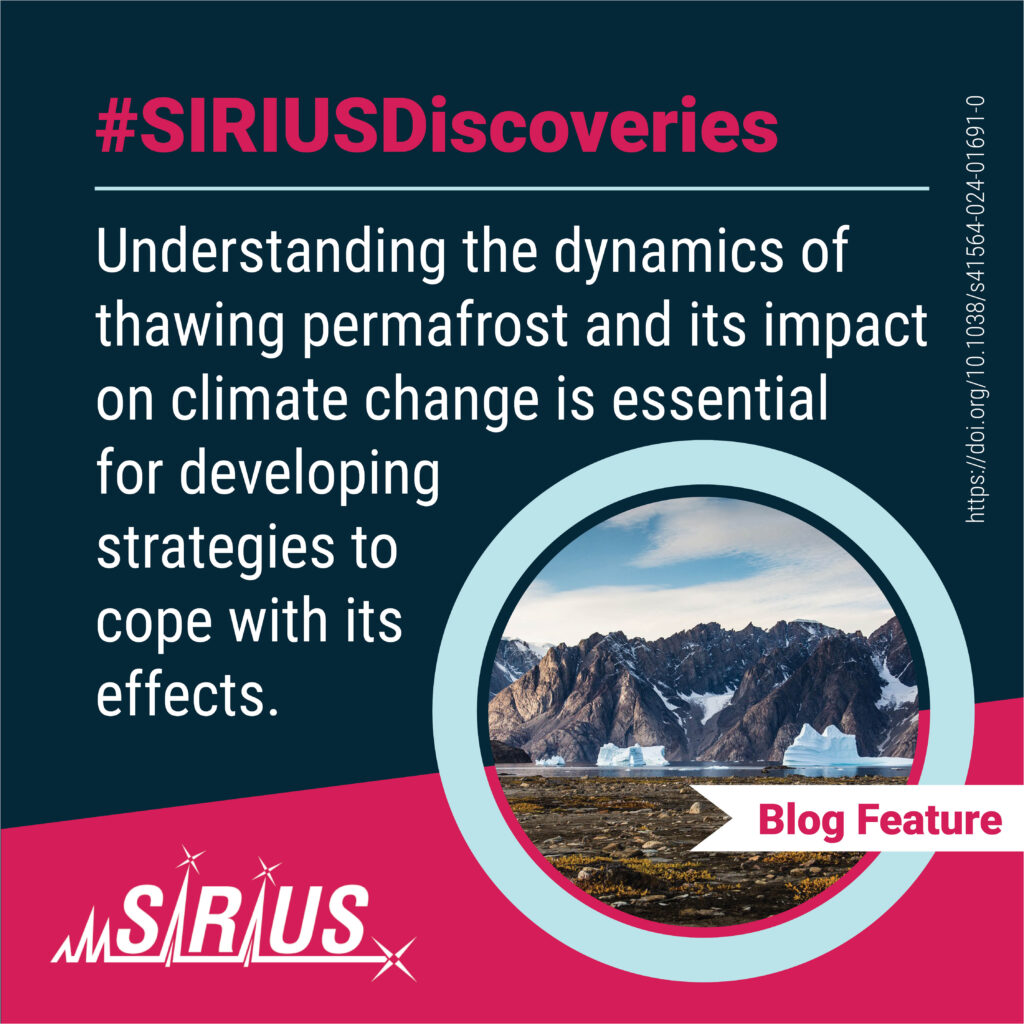
Assessing the consequences of thawing permafrost

Thawing permafrost, caused by climate change, releases stored carbon into the atmosphere, accelerating global warming. The enzyme latch hypothesis suggests that low-oxygen conditions in wetlands slow down enzymatic polyphenol degradation and carbon release. But are oxygen-dependent phenol oxidases really the only enzymes that microbial communities have in their arsenal? A closer look at the microbially catalysed carbon cycle, using SIRIUS, CSI:FingerID and CANOPUS for metabolite annotation.
#SIRIUSDiscoveries

Thawing permafrost, caused by climate change, releases stored carbon into the atmosphere, accelerating global warming. The enzyme latch hypothesis suggests that low-oxygen conditions in wetlands slow down enzymatic polyphenol degradation and carbon release. But are oxygen-dependent phenol oxidases really the only enzymes that microbial communities have in their arsenal? Or should we perhaps take a closer (metatranscriptomic and metabolomic) look at the microbially catalysed carbon cycle?

The easy way to comprehensive structure elucidation​

SIRIUS is the comprehensive software solution for the high-throughput identification of small molecules from fragmentation mass spectrometry data. SIRIUS provides a comprehensive set of features spanning every step from feature detection to detailed result validation. It is designed to not only accurately characterize known compounds but also to confidently identify “unknown unknowns” in complex biological samples. 

Share