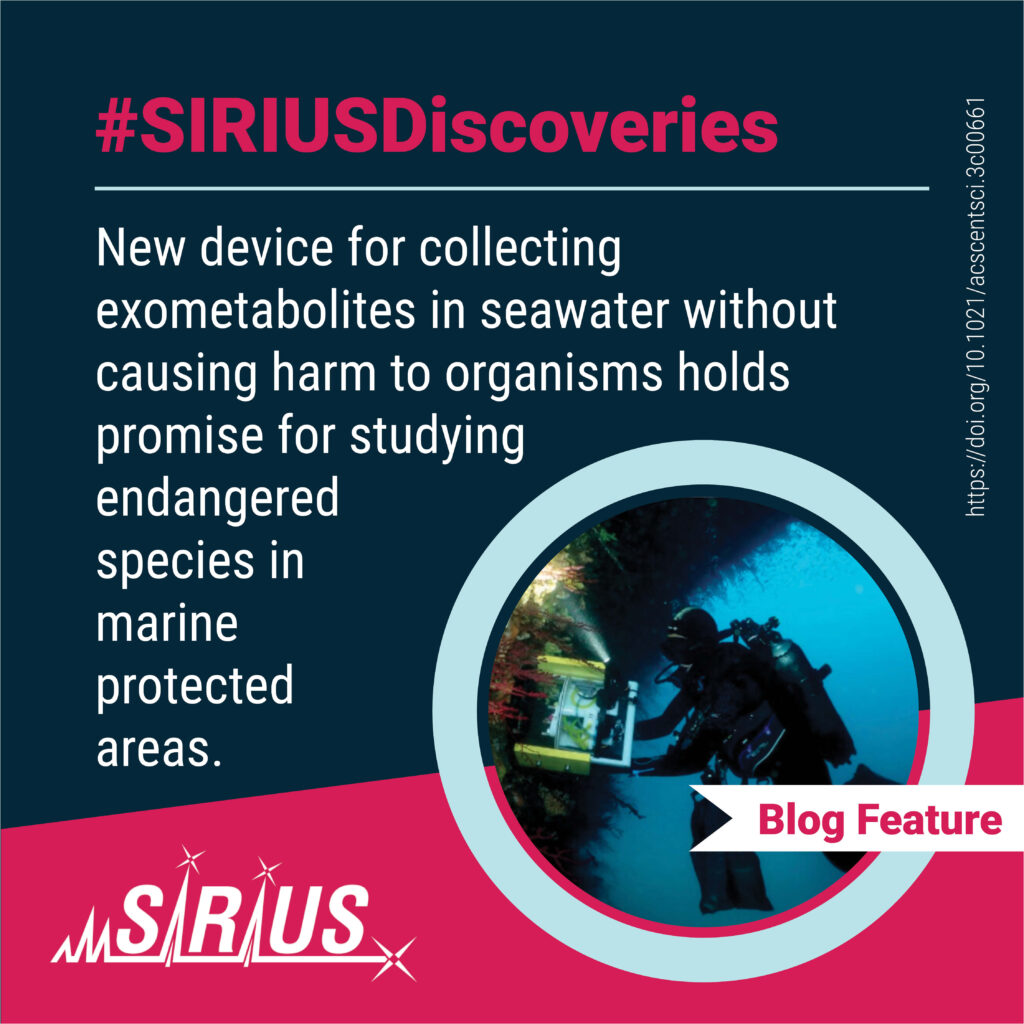
Examining seawater presents an enduring challenge due to the complexity of molecules present in trace amounts and their dynamic nature. The lowest ecological region of the sea is inhabited by holobionts, such as sponges, which significantly shape the marine chemical landscape through the release of diverse exometabolites. In addressing the need to capture these molecules immediately after release, a novel underwater device was developed, allowing in situ collection and enrichment without harming organisms. To test the device, researchers investigated exometabolites of sponges in the Mediterranean sea using untargeted mass spectrometry and SIRIUS to understand the chemical class distribution. This approach holds promise for studying endangered species in marine protected areas, assessing seasonal variations in exometabolite production, and monitoring toxins or human impacts in the marine environment.