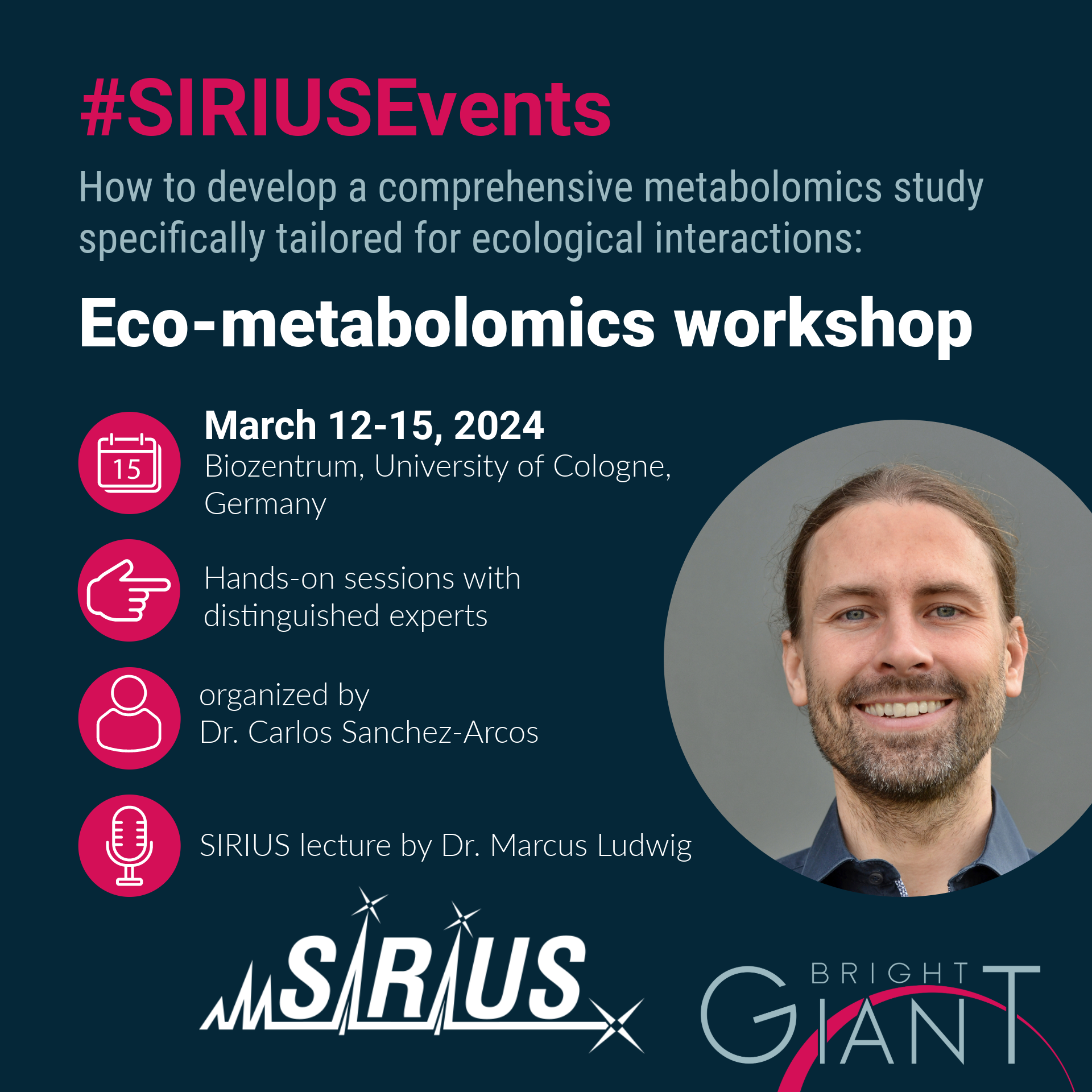
International experts will guide you through the intricacies of developing comprehensive metabolomics studies tailored for ecological interactions from experimental design to compound annotation.
The SIRIUS lecture will be held by Marcus Ludwig.
International experts will guide you through the intricacies of developing comprehensive metabolomics studies tailored for ecological interactions from experimental design to compound annotation.
The SIRIUS lecture will be held by Marcus Ludwig.
CANOPUS, our tool to predict the complete chemical class hierarchy of an unknown compound by assigning ClassyFire compound classes, is among the top 50 cited articles on AI in health and life sciences.
B. S. Glicksberg et al. Applied Sciences (2024) 10.3390/app14020785
Already over 30 years ago, Curry and Rumelhart introduced one of the first machine learning approaches to predict the presence or absence of key chemical substructures from tandem mass spectra. There are noteworthy conceptual similarities between their approach and SIRIUS structure annotation (CSI:FIngerID).
What they did not see was that a large number of weakly accurate predictions can still allow molecules to be unambiguously identified – a crucial conceptual leap that makes CSIFingerID the state-of-the-art method currently available for identifying small molecules from their MS/MS spectra.
M. A. Skinnider. Nat Rev Chem (2024) doi: 10.1038/s41570-023-00570-2
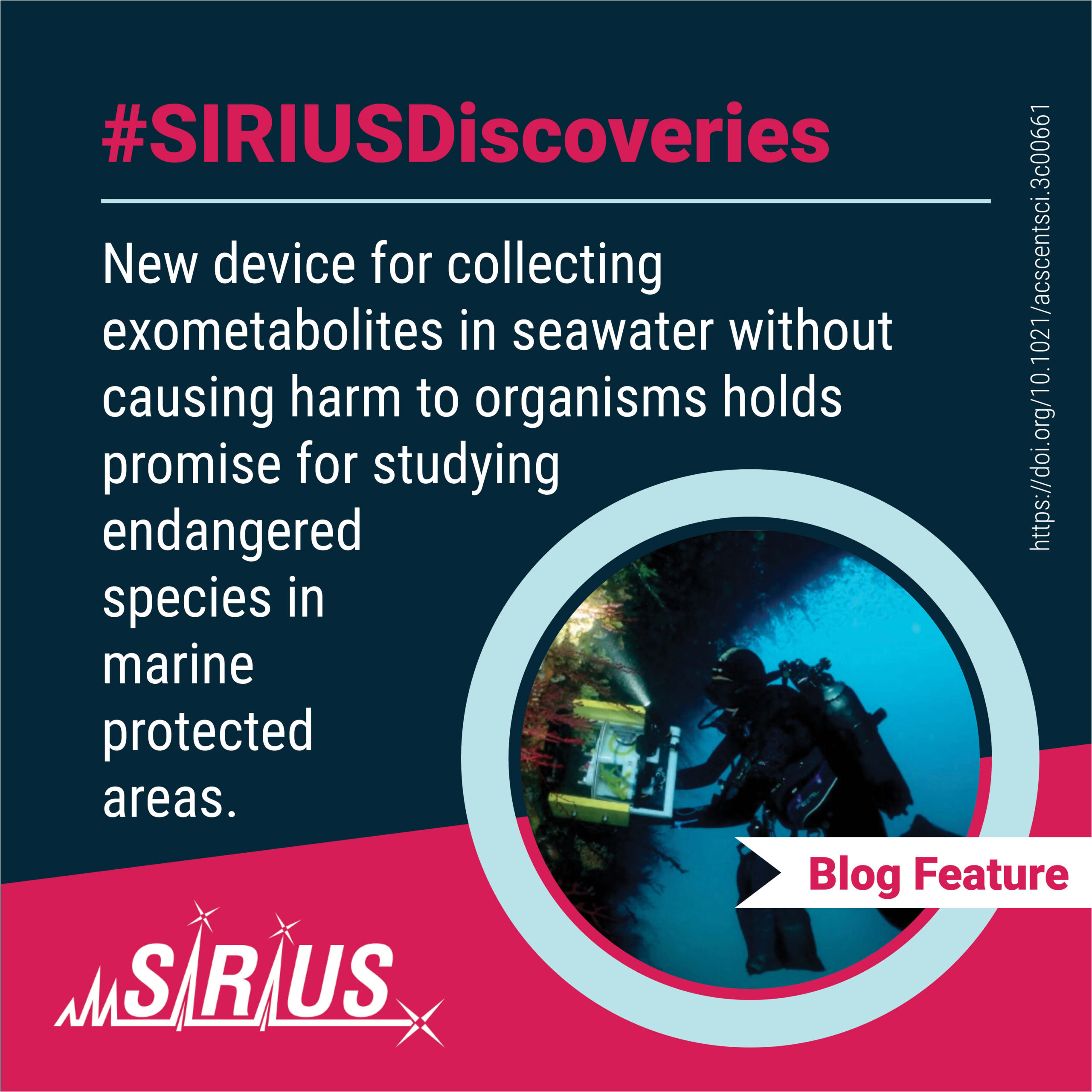
Examining seawater presents an enduring challenge due to the complexity of molecules present in trace amounts and their dynamic nature. The lowest ecological region of the sea is inhabited by holobionts, such as sponges, which significantly shape the marine chemical landscape through the release of diverse exometabolites. In addressing the need to capture these molecules immediately after release, a novel underwater device was developed, allowing in situ collection and enrichment without harming organisms. To test the device, researchers investigated exometabolites of sponges in the Mediterranean sea using untargeted mass spectrometry and SIRIUS to understand the chemical class distribution. This approach holds promise for studying endangered species in marine protected areas, assessing seasonal variations in exometabolite production, and monitoring toxins or human impacts in the marine environment.